
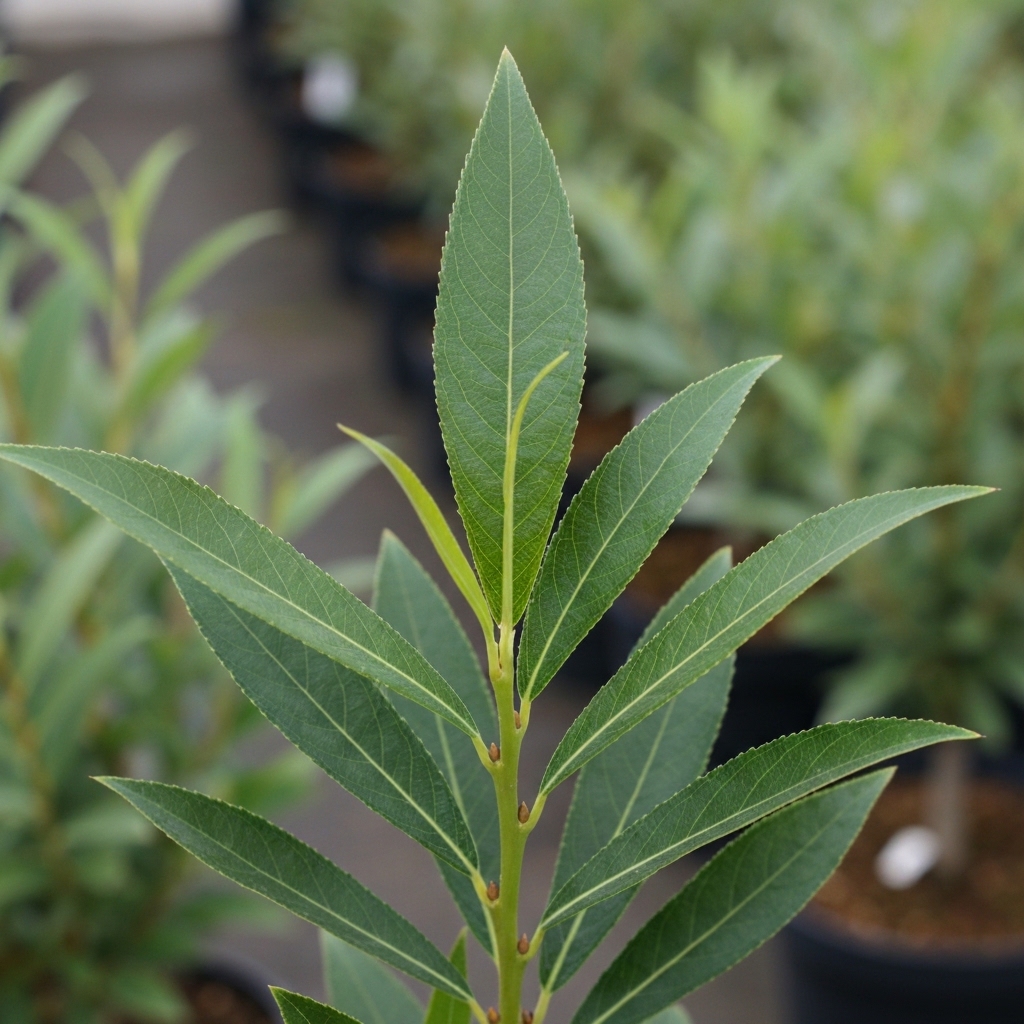
Salix fragilis
A familiar sight with its glossy, dark green leaves and a broad, spreading crown. This fast-growing native tree is perfectly at home by riversides, in damp ground, or in larger screening projects.
- Fast delivery in the region
- Home delivery available from £18.99
- In-house stock, high quality
Choose your desired size
Available
£295.00
Product information
The Crack Willow gets its name from the way its twigs and branches snap off with a distinct crack. We find it’s a real magnet for wildlife on the nursery; its early catkins provide a vital source of pollen and nectar for bees in spring. The glossy, lance-shaped leaves give the tree a healthy appearance all through summer, shimmering in the breeze.
This is a vigorous, large tree, capable of reaching up to 25 metres in height. It has a fast growth rate and develops a broad, often multi-stemmed, spreading habit. Salix fragilis thrives in full sun and prefers moist or wet soils, making it an excellent choice for stabilising riverbanks. It will tolerate a range of soil types, from light sand to heavy clay.
For the best results, we recommend planting in a spot where it has room to grow. It responds well to pollarding or coppicing if you need to manage its size. This traditional pruning also encourages the growth of flexible stems historically used for fencing and basketry. It’s a superb choice for a wildlife garden or for adding structure to a wet corner of a large garden.
Product Details
Common NameCrack Willow
Growth RateVigorous
Max height25 M
Bloom TimeApril to May
Flower ColourYellow-green
Leaf ColourGlossy dark green
Autumn ColourYellow-green
SunlightFull sun
PruningResponds well to pollarding or coppicing. Pruning is best carried out in late winter or early spring to remove any dead, damaged or crossing branches and to maintain a healthy structure.
Seasonal SpringYellow-green catkins appear on the bare branches or just as the new, bright green leaves emerge.
Seasonal SummerForms a dense canopy of long, glossy, lance-shaped green leaves.
Seasonal AutumnThe leaves turn a soft yellow-green before they fall for the winter.
Seasonal WinterA strong, structural tree with bare branches. Its fissured, grey-brown bark becomes more prominent.
Fruit DescriptionSmall capsules containing numerous tiny seeds, each with a tuft of silky hairs to help with wind dispersal.

Need any help or advice?
We are happy to provide you with personal advice. We would love to see you in our store or contact us.
Call us
01832 293755Get help
Support pageYou may also like
from£17.95
Available

from£1,074.00
Available
from£39.95
Sold out

from£49.95
Available

from£414.00
Available
from£29.95
Available
from£24.95
Sold out
from£49.95
Available

from£39.95
Available
from£360.00
Available