
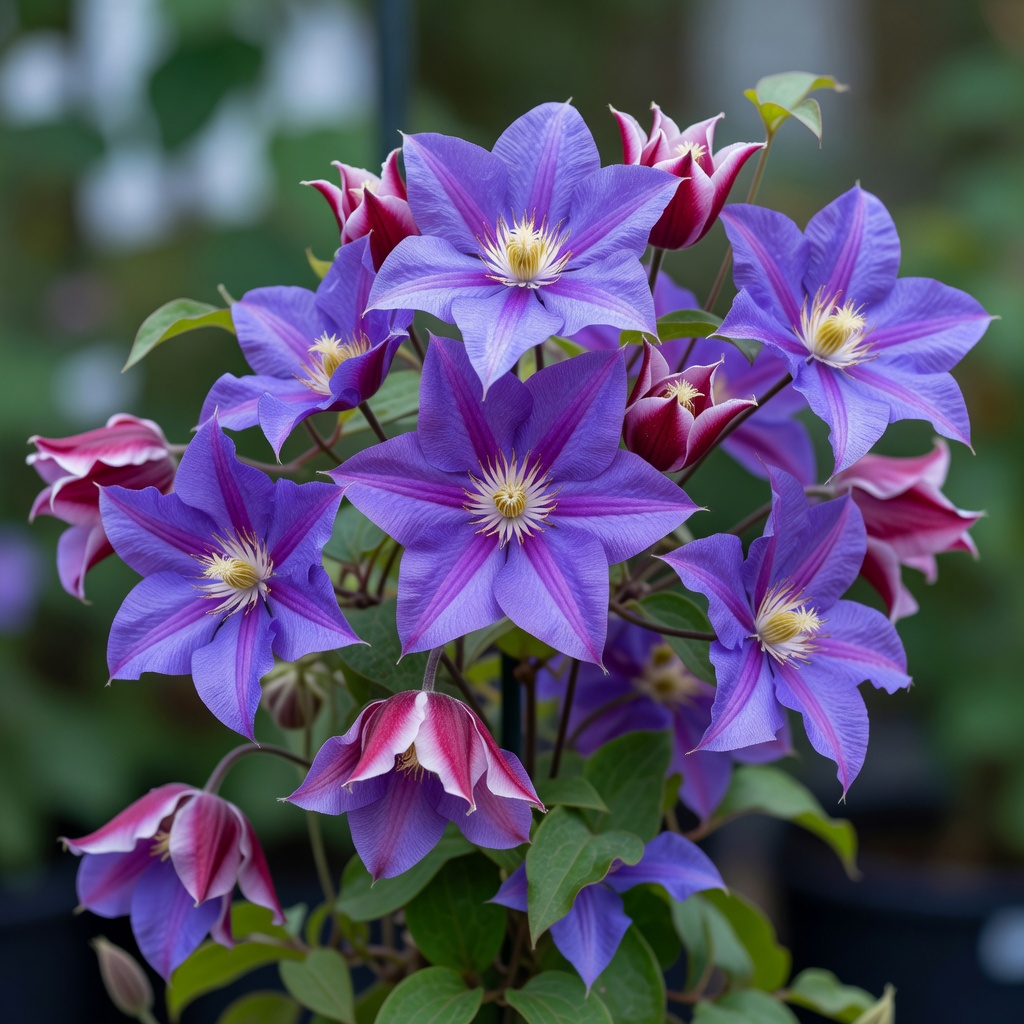
Clematis ‘Princess William’
Clematis ‘Princess William’ is a truly captivating climber, celebrated for its unique, tulip-shaped blooms in rich shades of purple and maroon, beautifully offset by bright yellow stamens. We find its vigorous, free-flowering nature makes it an excellent choice for adding vertical interest to walls, pergolas, or even larger containers in any garden.
- Fast delivery in the region
- Home delivery available from £18.99
- In-house stock, high quality
Choose your desired size
Available
£15.95
Product information
Clematis ‘Princess William’ is a real standout in the garden, a modern hybrid that brings a delightful touch of elegance and vibrant colour to any space. We’re particularly fond of its distinctive, nodding, tulip-shaped flowers, which unfurl from wine-red buds to reveal striking maroon outer petals that gently flare to deep violet interiors, all centred around a cheerful boss of pale yellow stamens. It’s a robust and vigorous grower, producing an abundance of these gorgeous blooms throughout the summer and well into autumn, providing a long season of interest. It’s also known for good resistance to clematis wilt, which is always a bonus for peace of mind.
Like many clematis, ‘Princess William’ thrives in a spot where its foliage can bask in full sun to partial shade, while its roots are kept cool and moist. We always recommend planting the crown about 5-8cm deep to encourage strong, multi-stemmed growth from the base. It appreciates a moisture-retentive, yet well-drained, fertile soil. If you’re planting in a container, a good quality John Innes No. 3 compost works wonderfully. This variety is fully hardy across most of the UK, rated H5, meaning it will tolerate winter temperatures down to -15°C.
As a Group 3 clematis, ‘Princess William’ is wonderfully easy to care for. We prune it hard in late winter or early spring, typically February or March, cutting back all the previous year’s stems to just above the lowest pair of strong, healthy buds, about 15-30cm from the ground. This encourages a fresh flush of growth and abundant flowers on new wood. Its rich colours pair beautifully with climbing roses or provide a stunning contrast scrambling through a silvery-leaved shrub. The feathery seed heads that follow the blooms also offer lovely architectural interest into the colder months.
Product Details
Common NameClematis 'Princess William'
Max height3.0 M
Bloom TimeJune to September
Flower ColourMaroon outer petals, deep violet interiors, yellow stamens
Leaf ColourFresh green
SunlightFull sun to partial shade
PruningPrune hard in late winter or early spring (February/March) to 15-30cm above ground level (Group 3).
Seasonal SpringNew growth emerges, this is the time for its annual hard prune to encourage strong summer flowering.
Seasonal SummerAbundant tulip-shaped flowers in maroon and violet with yellow stamens appear from June onwards, continuing through the season.
Seasonal AutumnFlowering continues, providing late-season colour, often followed by decorative, feathery seed heads.
Seasonal WinterThe deciduous foliage dies back. The plant is dormant and hardy, ready for its late winter prune.

Need any help or advice?
We are happy to provide you with personal advice. We would love to see you in our store or contact us.
Call us
01832 293755Get help
Support pageYou may also like

from£12.95
Available

from£8.95
Available

from£12.95
Available

from£12.95
Available

from£22.95
Available

from£12.95
Available

from£12.95
Available

from£9.95
Available

from£12.95
Sold out

from£9.95
Available